
A sheer sea stack between Stonehaven and Dunnottar has yielded Pictish stones and traces of a high-status fort. Dunnicaer is a coastal stack and Pictish hillfort site, a defended elite settlement now cut off by cliffs and tide.
The archaeology is striking because it pushes against simple timelines. Symbol stones found in the nineteenth century may have been set into a rampart dated by recent excavation to the second to fourth centuries AD, earlier than conventional dates for many Class I Pictish stones.
What follows is drawn from published sources, with each claim labelled by how firmly it is established.
History
Dunnicaer stands between Dunnottar Castle and Stonehaven in Strathlethan Bay. A symbol stone was prised from the stack as early as 1819 and used as a hearthstone.
In 1832 youths found a wall on the summit and threw stones down into the sea; recovered stones proved to be Pictish symbol stones. Alexander Thomson documented the stones in 1857.
Investigations in 1977 and 1982 found nothing significant on the summit. University of Aberdeen excavations began in 2015 and revealed a fort.
Radiocarbon dating of rampart timber placed use of the fort between the second and fourth centuries AD. Finds included glass, samian ware, black-burnished ware pottery, and a lead weight, indicating contact with the Roman world.
The fort was later abandoned, perhaps after erosion or movement to Dunnottar.
People
-
Alexander Thomson
documented the Dunnicaer symbol stones in 1857.
-
Gordon Noble
University of Aberdeen archaeologist associated with recent Dunnicaer research.
-
Martin Goldberg
co-author on research into early Pictish symbol systems.
Plan your visit
- Location
- 56.9528°N · 2.1953°W
- Access
- Open access
- Terrain
- Rough ground — reasonable boots advised
Opening & admission
The source pack does not provide reliable current admission details; verify before travelling.
- The sea stack is cut off at high tide and surrounded by cliffs; the pack describes unusual difficulty of access.
Nearby places
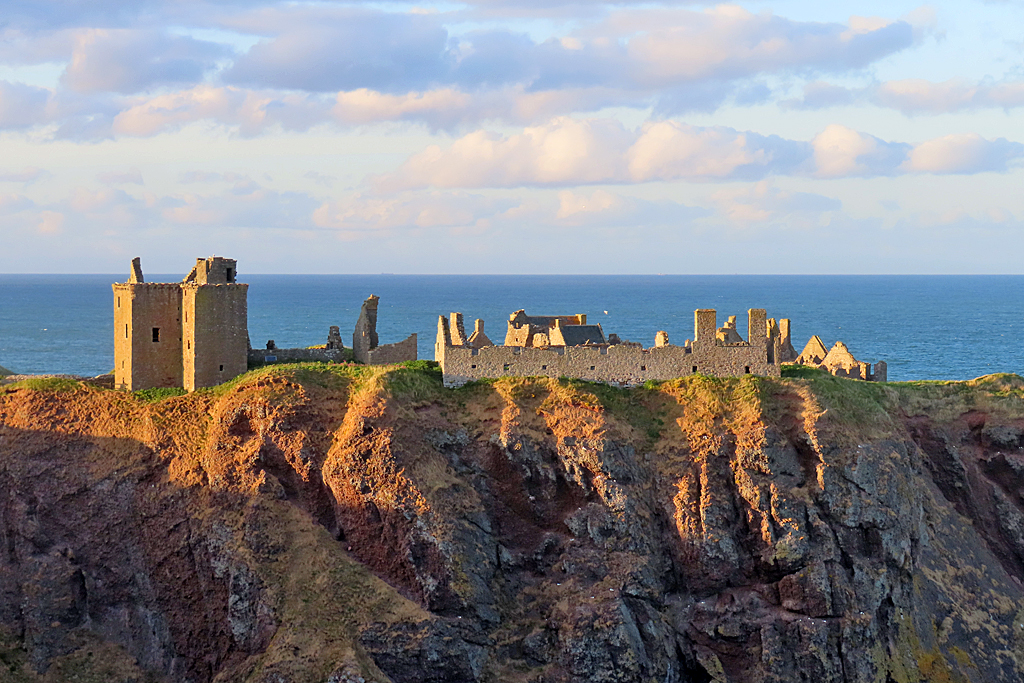
Fortified place · Medieval
Dunnottar Castle
Aberdeenshire
The Annals of Ulster record two sieges of 'Dún Foither' in 681 and 694, possibly the earliest written references to the site; the 681 attack has be…
- Near Stonehaven
- 8 min walk from car park
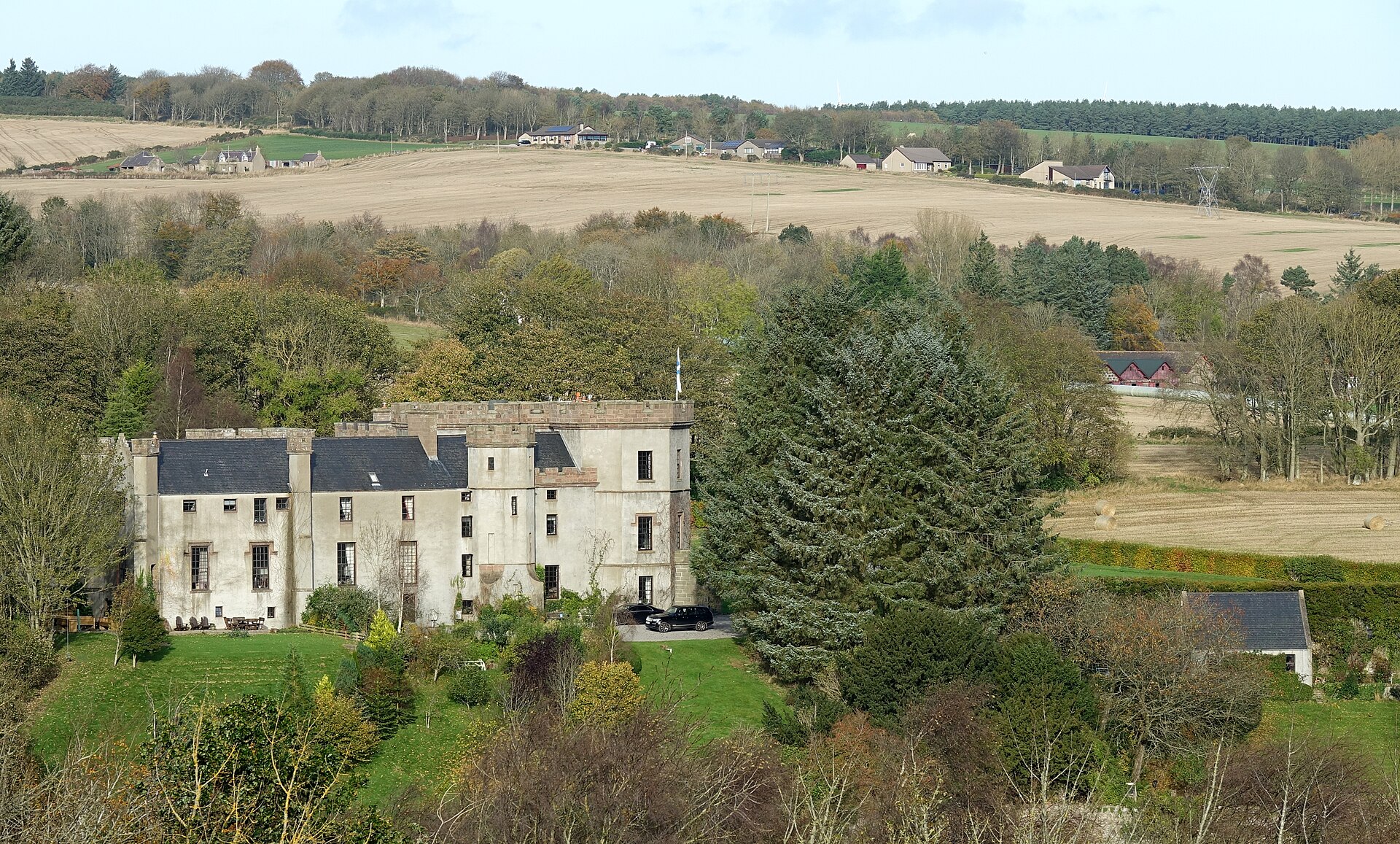
Minor monument · Medieval
Dovecot, Fetteresso Castle
Aberdeenshire
Dovecote with HES-listed pre-1800 evidence (16th century).
Questions people ask
- What is Dunnicaer?
- It is a sea stack off the Aberdeenshire coast where Pictish symbol stones and a fort have been found.
- Why is access difficult?
- The stack is cut off from the mainland at high tide and surrounded by precipitous cliffs.
- Why are the stones important?
- They may date from the third or fourth centuries AD, earlier than conventional dating for the simplest Pictish symbol stones.
- What Roman-world evidence was found?
- Excavations found glass, samian ware, black-burnished ware pottery, and a lead weight.
Sources
Explore more: Carved stones · Pictish & early medieval · Aberdeenshire
The Ancient Codex, in your pocket
Get the Pocket Codex app
Carry the directory with you — Dunnicaer and thousands of ancient places across Britain and Ireland, offline, wherever you roam.