
A stone tank and hearth sit inside a mound of shattered, fire-cracked stone on South Ronaldsay. Liddle Burnt Mound is a Bronze Age burnt mound, an archaeological site formed from repeated heating and dumping of stones, ash, and charcoal.
The site is valuable because its purpose is still debated. Most investigators favour a domestic use, perhaps cooking, but alternatives include bathing, sauna use, salt work, or leather preparation; an Orkney experiment cooking lamb in a heated stone tank tested the food-preparation idea.
What follows is drawn from published sources, with each claim labelled by how firmly it is established.
History
Liddle Burnt Mound is on Liddle Farm on South Ronaldsay in Orkney. Farmer Ronald Simison had been quarrying the mound for road metal when he found stone structures in 1972.
Simison alerted Colin Renfrew, who was excavating at Quanterness. John Hedges investigated and recognised the remains of a stone building at the mound centre.
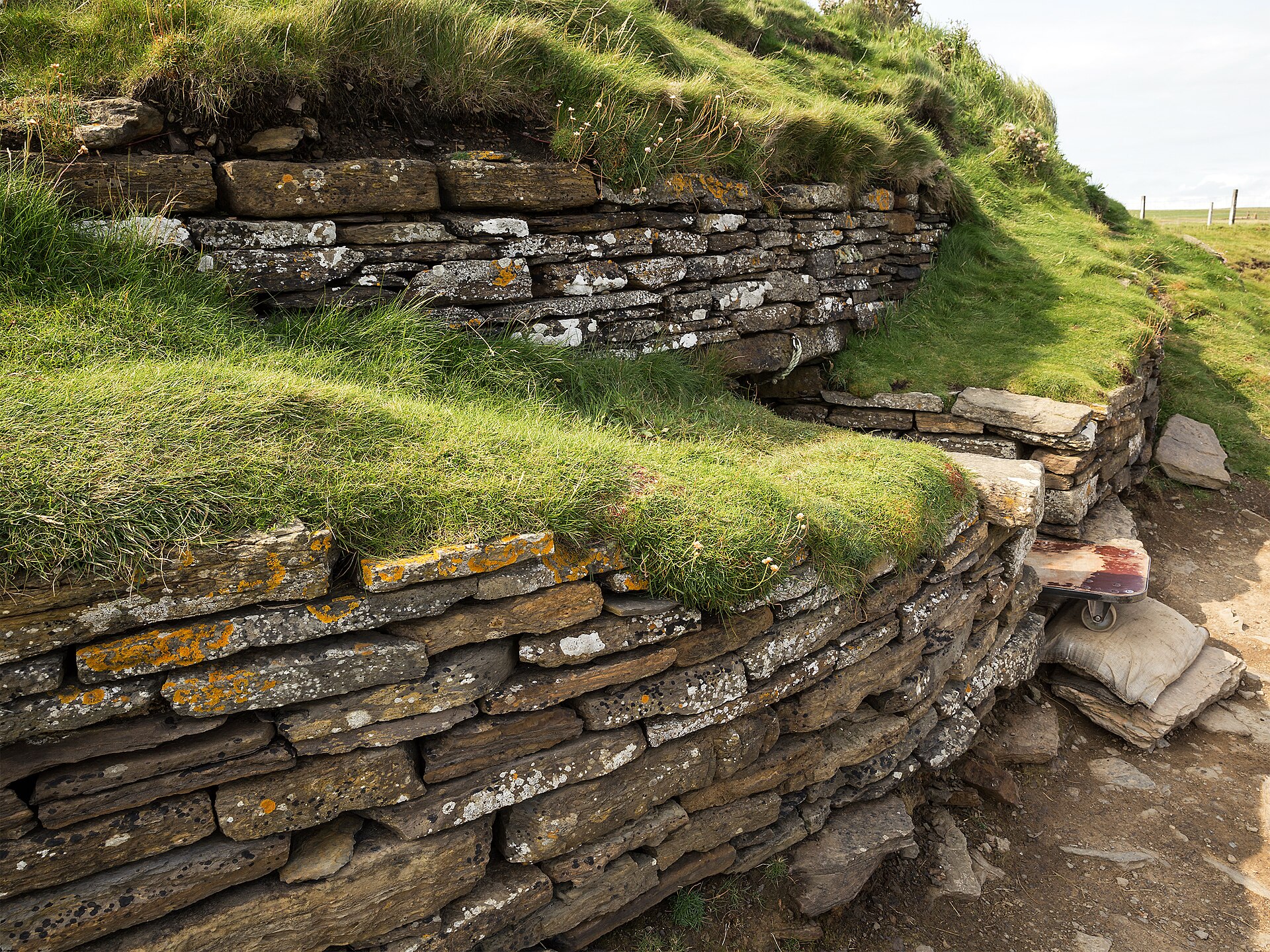
The building is oval, with thick external walls and internal walls forming compartments. One compartment holds a hearth, and a large recessed flagstone tank sits in the centre.
The tank was waterproofed with clay and found half-filled with intensely heated shattered stones. The surrounding mound is made mainly of shattered stone, charcoal, and ash.
Finds included hammerstones, pot lids, pottery, and burnt goat and sheep bones. Most investigators think the site had a domestic function, possibly cooking.
Alternative interpretations include temporary hunting-camp cooking, saunas, salt preparation, and leather preparation. Dating indicates use between 1200 and 500 BC.
People
-
Ronald Simison
farmer who discovered stone structures while quarrying the mound in 1972.
-

Portrait: Portable Antiquities Scheme from London, England / Wikimedia Commons / CC BY 2.0 Colin Renfrew
archaeologist alerted by Simison during work at Quanterness.
-
John Hedges
investigated the mound and recognised the central building.
What to look for
-
Stone tank
A recessed, waterproofed stone tank sits in the building centre.
-
Burnt mound material
The mound is made of shattered heated stone, charcoal, and ash.
Plan your visit
- Location
- 58.7457°N · 2.9174°W
- Access
- Open access
- Terrain
- Easy going
Opening & admission
The source pack does not provide reliable current admission details; verify before travelling.
- The site is on Liddle Farm; the pack gives no current visitor access details.
Nearby places

Questions people ask
- What is Liddle Burnt Mound?
- It is a Bronze Age burnt mound with a central stone building, hearth, and tank.
- What is a burnt mound?
- It is a mound formed from heated stones, charcoal, ash, and related activity debris.
- What was it used for?
- The purpose is debated, but many investigators favour cooking or another domestic function.
- How was it discovered?
- Ronald Simison uncovered stone structures in 1972 while quarrying the mound for road metal.
Sources
Explore more: Tomb or burial places · Prehistoric · Orkney Islands
The Ancient Codex, in your pocket
Get the Pocket Codex app
Carry the directory with you — Liddle Burnt Mound and thousands of ancient places across Britain and Ireland, offline, wherever you roam.