
An earlier priory at Dunfermline dated back to the reign of Malcolm III (Máel Coluim mac Donnchada, 'Malcolm Canmore', reigned 1058–93) and his queen, St Margaret. King David I of Scotland founded…
Dunfermline Abbey is a building or ruin near Dunfermline, Fife, Scotland.
What follows is drawn from published sources, with each claim labelled by how firmly it is established.
History
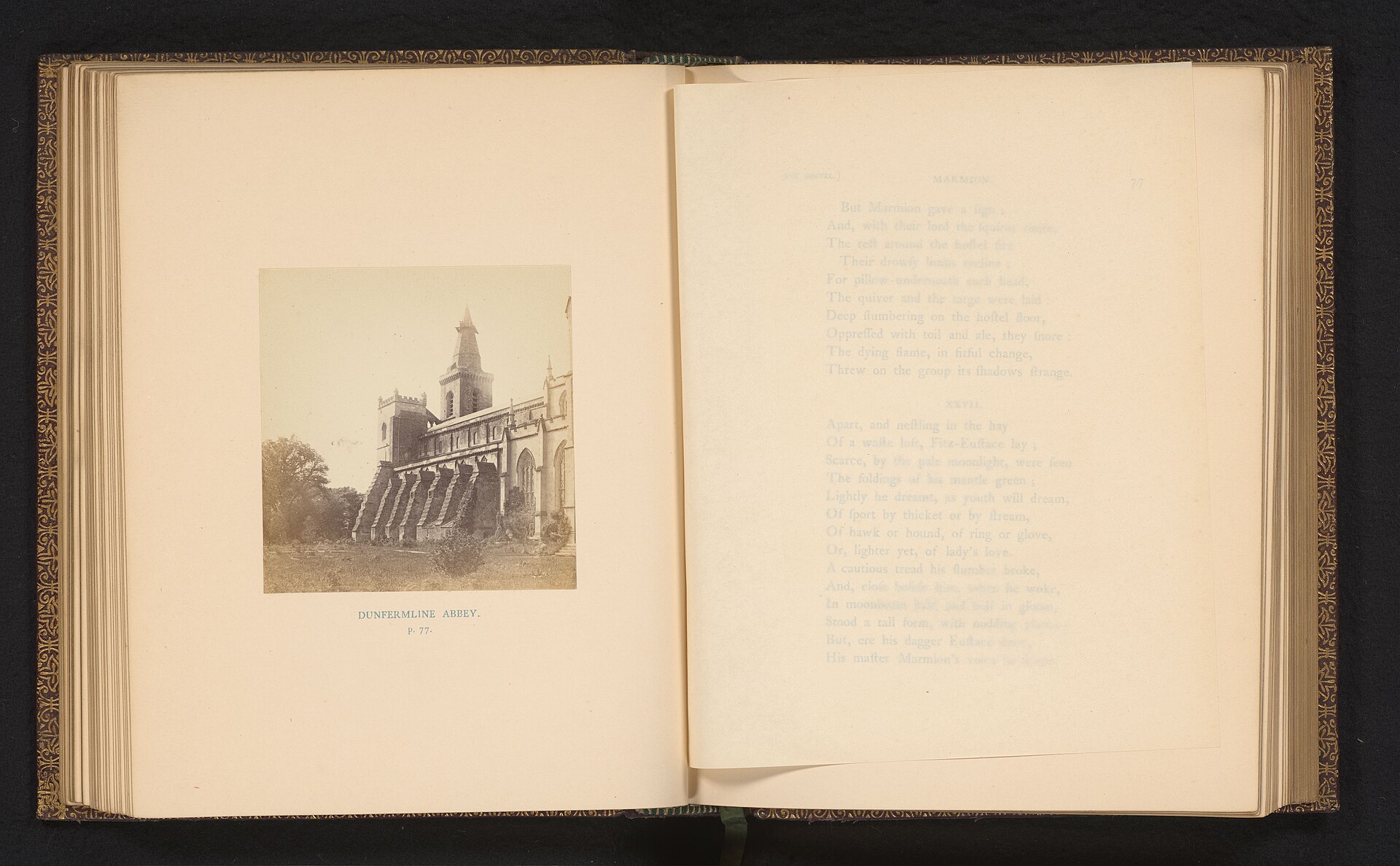
An earlier priory at Dunfermline dated back to the reign of Malcolm III (Máel Coluim mac Donnchada, 'Malcolm Canmore', reigned 1058–93) and his queen, St Margaret. King David I of Scotland founded the Benedictine Abbey of the Holy Trinity and St Margaret on this base in 1128.
On 19 June 1250, following her canonization, St Margaret's remains were disinterred and placed in a reliquary at the high altar; the abbey became an important pilgrimage destination hosting her shrine and cult, from which it later claimed foundation (an earlier foundation charter was fabricated to that end).
During the winter of 1303 the court of Edward I of England was held in the abbey, and on his departure the following year most of the buildings were burned.
During the Scottish Reformation the abbey church underwent a first Protestant 'cleansing' by September 1559 and was sacked in March 1560; by September 1563 the choir and feretory chapel were roofless and the nave badly damaged. The nave was spared and repaired in 1570 by Robert Drummond of Carnock.
A long structural decline followed: parts of the east end collapsed in 1672, part of the central tower is said to have fallen in 1716, the east gable tumbled in 1726, and the central tower made its final collapse in 1753.
Robert the Bruce was buried in the choir in 1329; his skeleton was rediscovered in 1818 and reinterred with pomp beneath the pulpit of the new church. In 1891 the pulpit was moved and a monumental brass set in the floor to mark the royal vault. (Bruce's heart rests at Melrose.)
The present parish church, in the Perpendicular style, opened for public worship in 1821 on the site of the ancient chancel and transepts; the old Romanesque nave now forms its vestibule.
People
-
King David I of Scotland
Founded the Benedictine abbey in 1128
-
St Margaret of Scotland
Queen whose shrine, cult and pilgrimage made the abbey; buried here 1093, enshrined 1250
-
Malcolm III ('Malcolm Canmore')
King under whom the earlier priory existed; buried beside Margaret
-
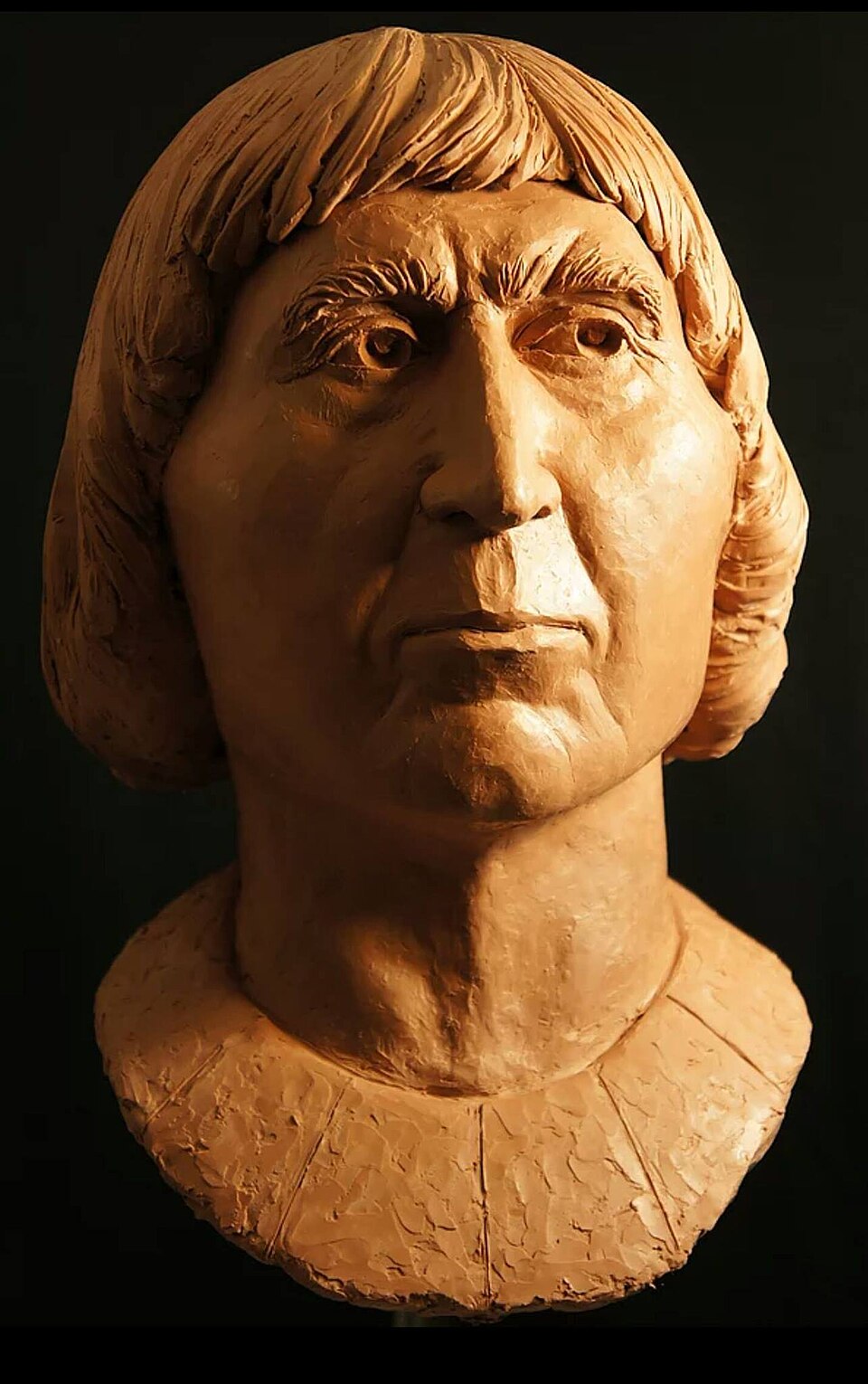
Portrait: S.A.Farabi / Wikimedia Commons / CC BY-SA 4.0 Robert the Bruce
King of Scots, buried in the choir 1329; remains rediscovered 1818
-
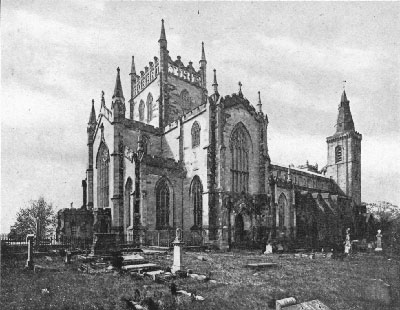
Portrait: Unknown / Wikimedia Commons / Public domain Geoffrey of Canterbury
First Abbot of Dunfermline; former Prior of Christ Church, Canterbury
-
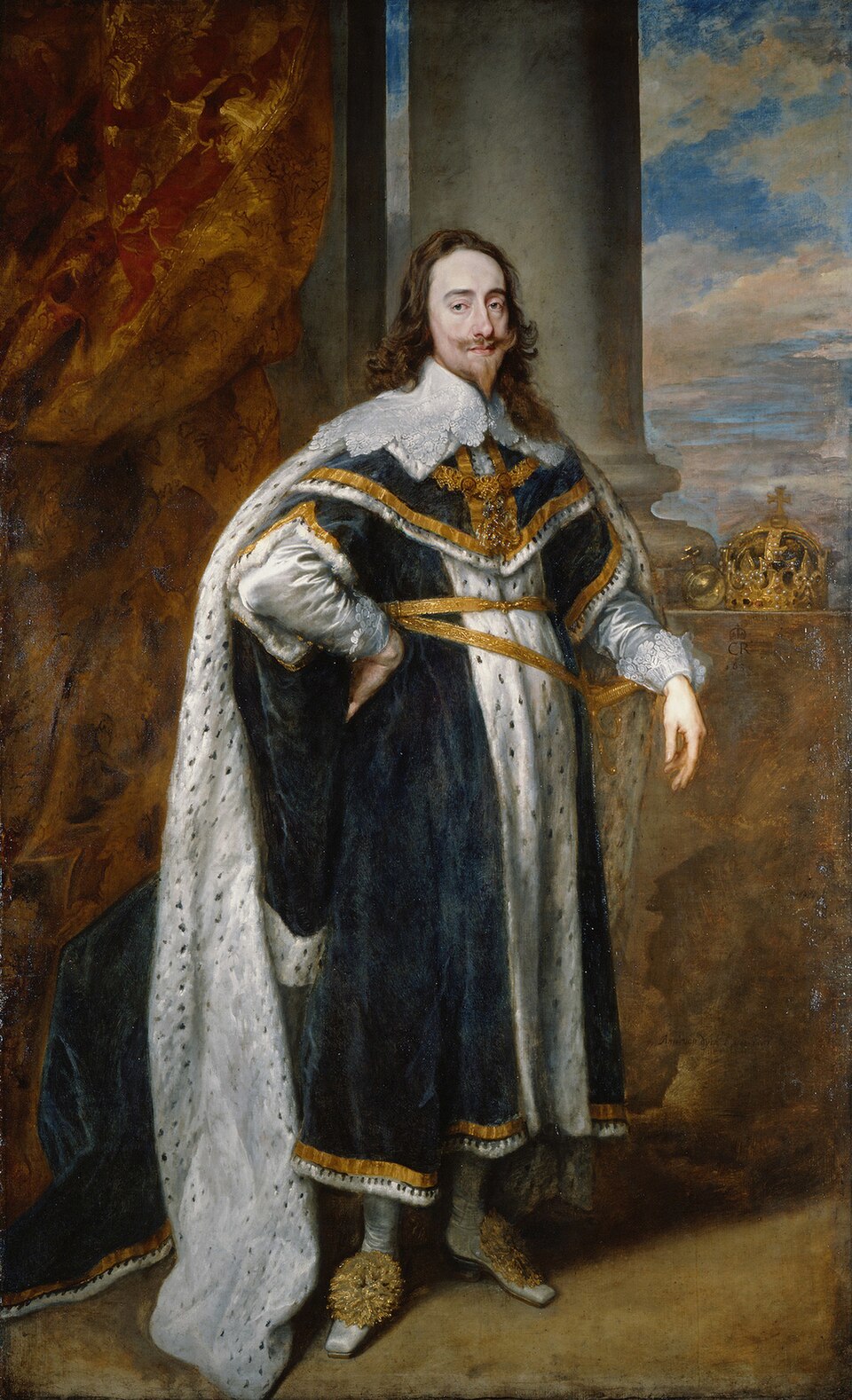
Portrait: Anthony van Dyck / Wikimedia Commons / Public domain Charles I
Born in Dunfermline in 1600; the last British monarch born in Scotland
-
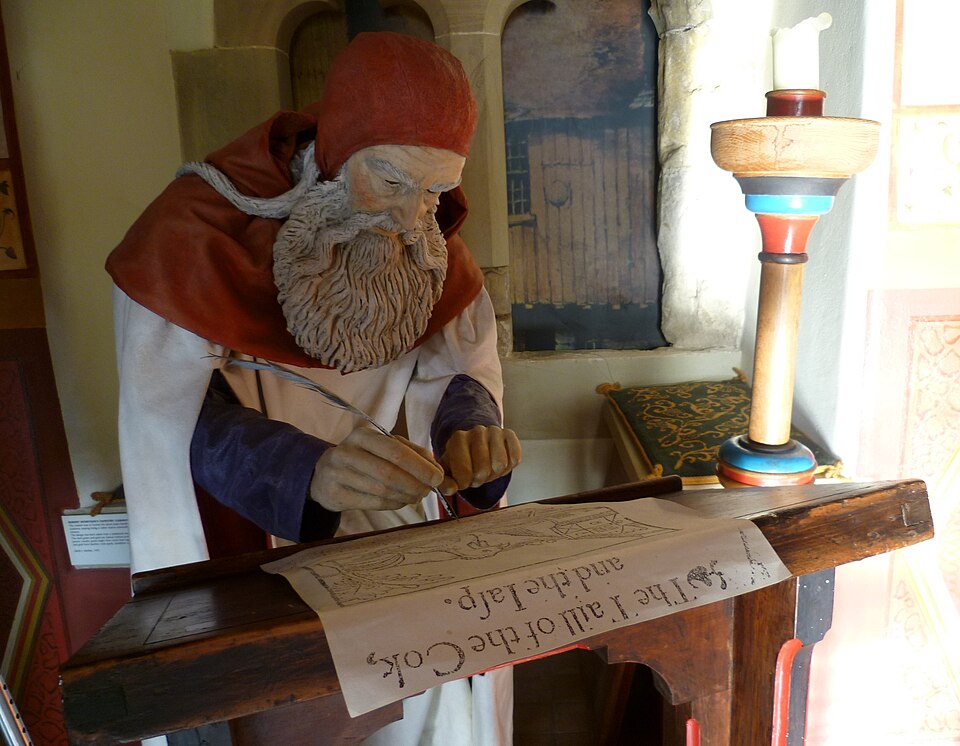
Portrait: Kim Traynor / Wikimedia Commons / CC BY-SA 3.0 Robert Henryson
Northern Renaissance poet associated with the abbey
-
Queen Victoria
Commanded the restoration and enclosure of the tomb of Margaret and Malcolm Canmore
Cultural influences
-
Romanesque architecture — the abbey was a fine example of simple, massive Romanesque, surviving most fully in the 12th-century nave with its richly carved west doorway and the flanking western towers built by Alexander I.
-
Benedictine monasticism — Dunfermline's first monks were probably supplied from Christ Church, Canterbury; at its height the abbey controlled four burghs, three courts of regality and lands from Moray to Berwickshire.
-
Its design reached as far as India — the Afghan Church in Mumbai (dedicated to St John the Baptist) references the doorway and right side of Dunfermline Abbey's church.
Connections
-
Iona
The only burial place in Scotland to have received more of the nation's royal dead than Dunfermline
-
Melrose Abbey
Holds the heart of Robert the Bruce, whose body lies at Dunfermline
-
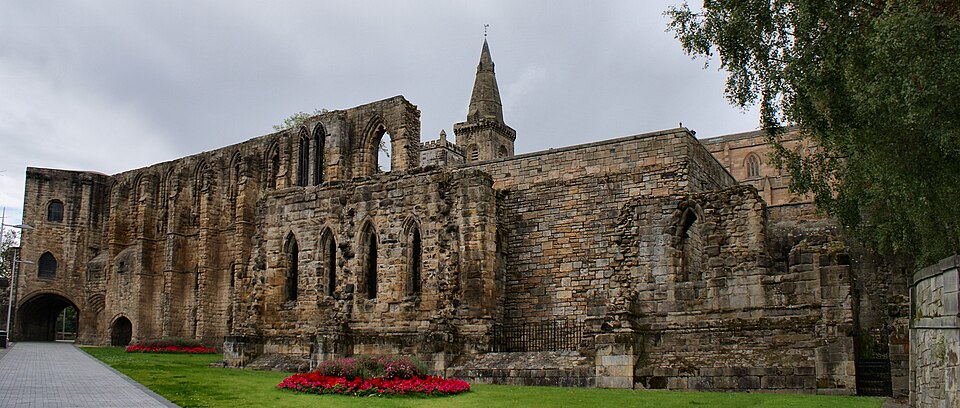
Photo: Chiswick Chap / Wikimedia Commons / CC BY-SA 3.0 Dunfermline Palace
Ruin adjoining the abbey, part of the original abbey complex and connected to it via the gatehouse
-
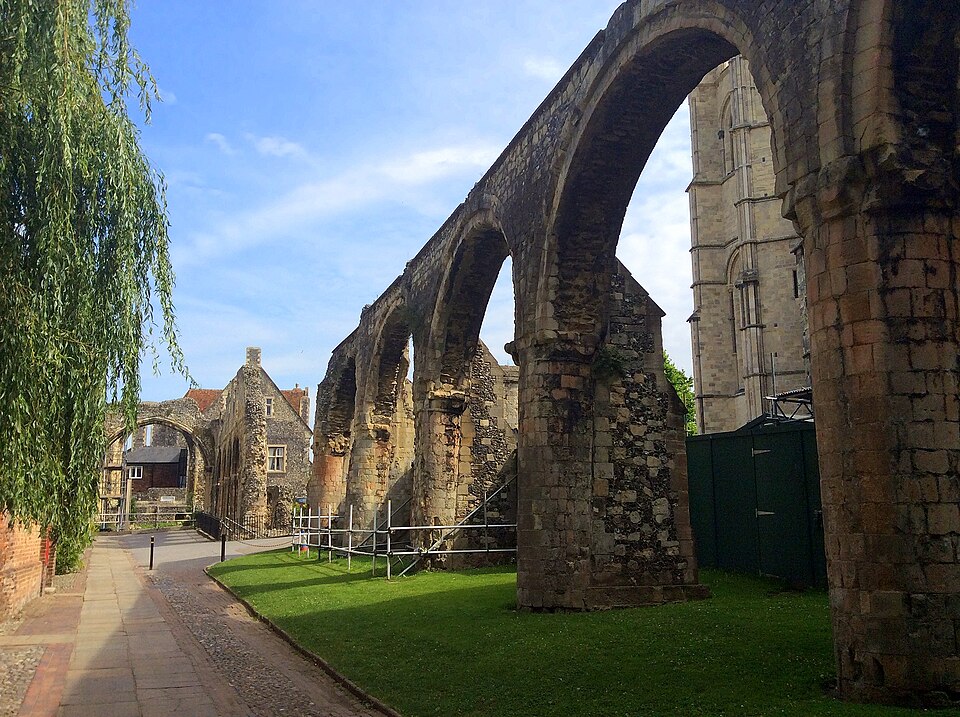
Photo: Shitha Valsan / Wikimedia Commons / CC BY-SA 4.0 Christ Church, Canterbury
Kent monastery that probably supplied Dunfermline's first monks and its first abbot
Discovery & excavation
A rich Romanesque doorway was exposed in the south wall in 1903, when masons were cutting a site for a Second Boer War memorial; a new site was found for the monument so the ancient entrance could be preserved. The skeleton of Robert the Bruce was discovered in the choir in 1818 and reinterred beneath the new church's pulpit.
In culture
-
After Iona, Dunfermline has received more of Scotland's royal dead than any other place in the kingdom — among them David I, Malcolm IV, Alexander III, and Robert the Bruce — making it one of the country's foremost royal mausolea.
What to look for
-
The 12th-century Romanesque nave — surviving from the original abbey church, with a beautiful carved doorway in its west front; it now serves as the vestibule of the 1821 church.
-
The monumental brass set in the floor (1891) marking the royal vault where Robert the Bruce was reinterred beneath the pulpit.
-
The restored, enclosed tomb of St Margaret and Malcolm Canmore within the ruined walls of the Lady chapel, restored by command of Queen Victoria.
-
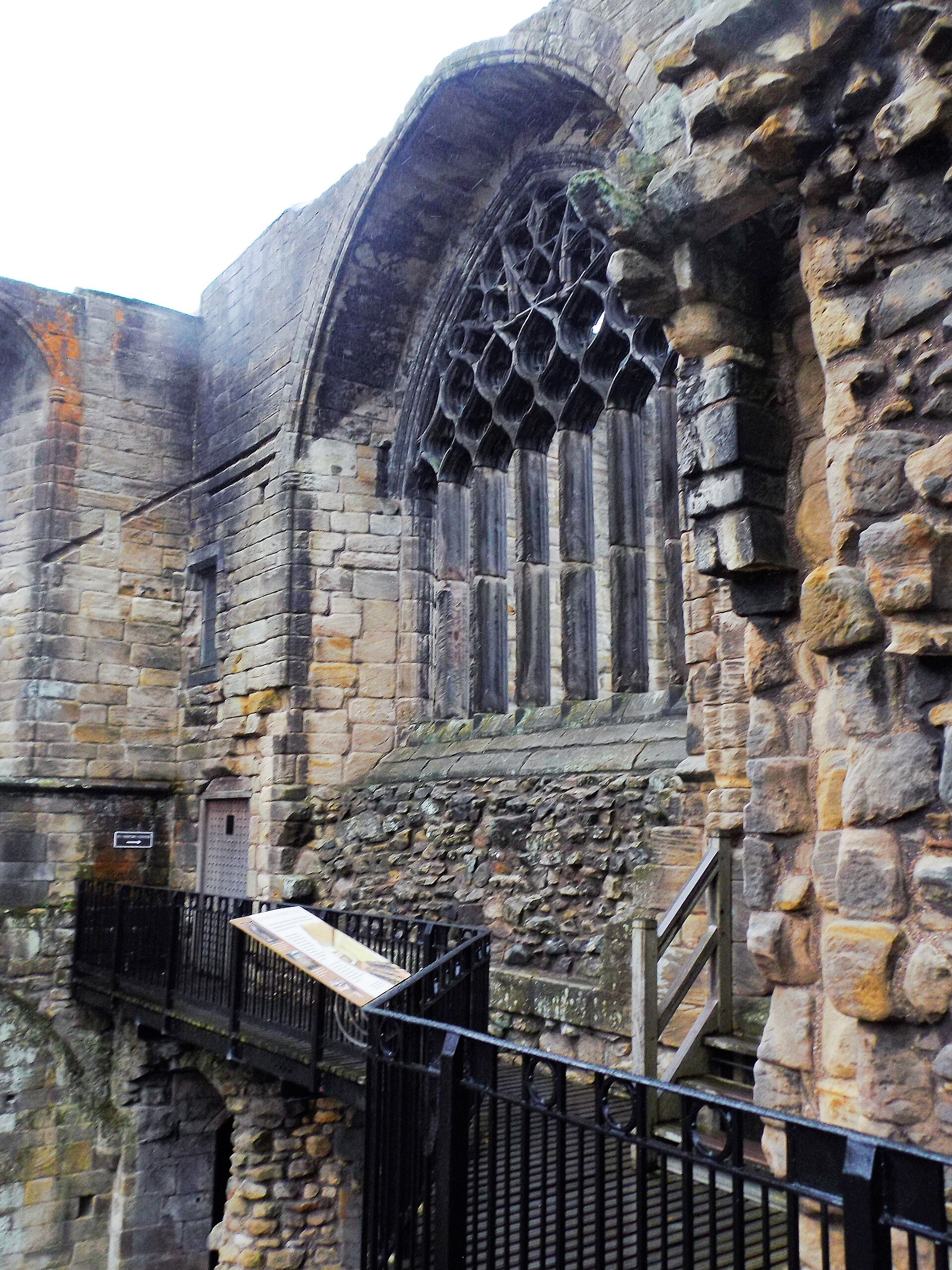
The surviving south wall of the refectory with its fine window, and the rooms over the gatehouse, which formed part of the former city wall.
-
The tomb of William Schaw, Master of Work to the Crown of Scotland (d.1602), still visible in the abbey.
Standing there
- Entering through the surviving 12th-century Romanesque nave, you pass under a richly carved west doorway into a hall of massive cylindrical piers carved with bold geometric patterns — simple, heavy Norman stonework that now serves as the vestibule to the 1821 parish church built over the medieval chancel.
- In the floor a monumental brass set in 1891 marks the royal vault where Robert the Bruce's bones, rediscovered in 1818, were reinterred beneath the pulpit — a quiet spot that makes concrete that this was, after Iona, the resting place of more of Scotland's royal dead than anywhere in the kingdom.
- Outside, among the roofless ruins, you find the enclosed tomb of St Margaret and Malcolm Canmore within the broken walls of the Lady chapel, restored by command of Queen Victoria, alongside the surviving south refectory wall with its fine window and the rooms over the gatehouse that once formed part of the city wall.
- At its medieval height this was a great roofed Benedictine abbey loud with sung offices and the bustle of pilgrimage, the air of incense and candle-wax around St Margaret's gold-and-jewelled reliquary shrine at the high altar, drawing pilgrims to her cult from across Scotland.
- The open, broken east end carries the memory of repeated catastrophe — most of the abbey burned after Edward I's court wintered here in 1303-04, the church was sacked in 1560 during the Reformation, and across the following century the choir went roofless and the central tower finally collapsed in 1753.
Plan your visit
- Location
- 56.0697°N · 3.4635°W
- Nearest settlement
- Dunfermline
- Access
- Paid entry — managed visitor site
- Start point
- Dunfermline Abbey and Palace · St Margaret’s Street · Dunfermline · Fife · KY12 7PE · National Grid reference: NT 090 873
- Best time
- Please check the 'Prices & times' tab for details Prices & times Admission prices Free to visit, donations are welcome. _Opening times are subject to change_. Closures for private services and events - Sunday 7 June: the Abbey church will be closed all day The abbey is a working church run by the Church of Scotland.
- Start point
- St Margaret Street Car Park — Pay-and-display town-centre car park on St Margaret Street, the abbey's own address. Several other public car parks lie within a few hundred metres.
- Sat-nav
- KY12 7PE
Opening & admission
Free entry
- Please check the 'Prices & times' tab for details Prices & times Admission prices Free to visit, donations are welcome.
- _Opening times are subject to change_.
- Closures for private services and events - Sunday 7 June: the Abbey church will be closed all day The abbey is a working church run by the Church of Scotland.
- 1 Apr to 30 Sept: Daily 10am (1pm on Sun), to last entry at 4pm (closes 4.30pm).
- 1 Oct to 31 Mar: Daily except Sun & Mon, 10am to last entry at 3.15pm (closes 4pm).
Nearby places
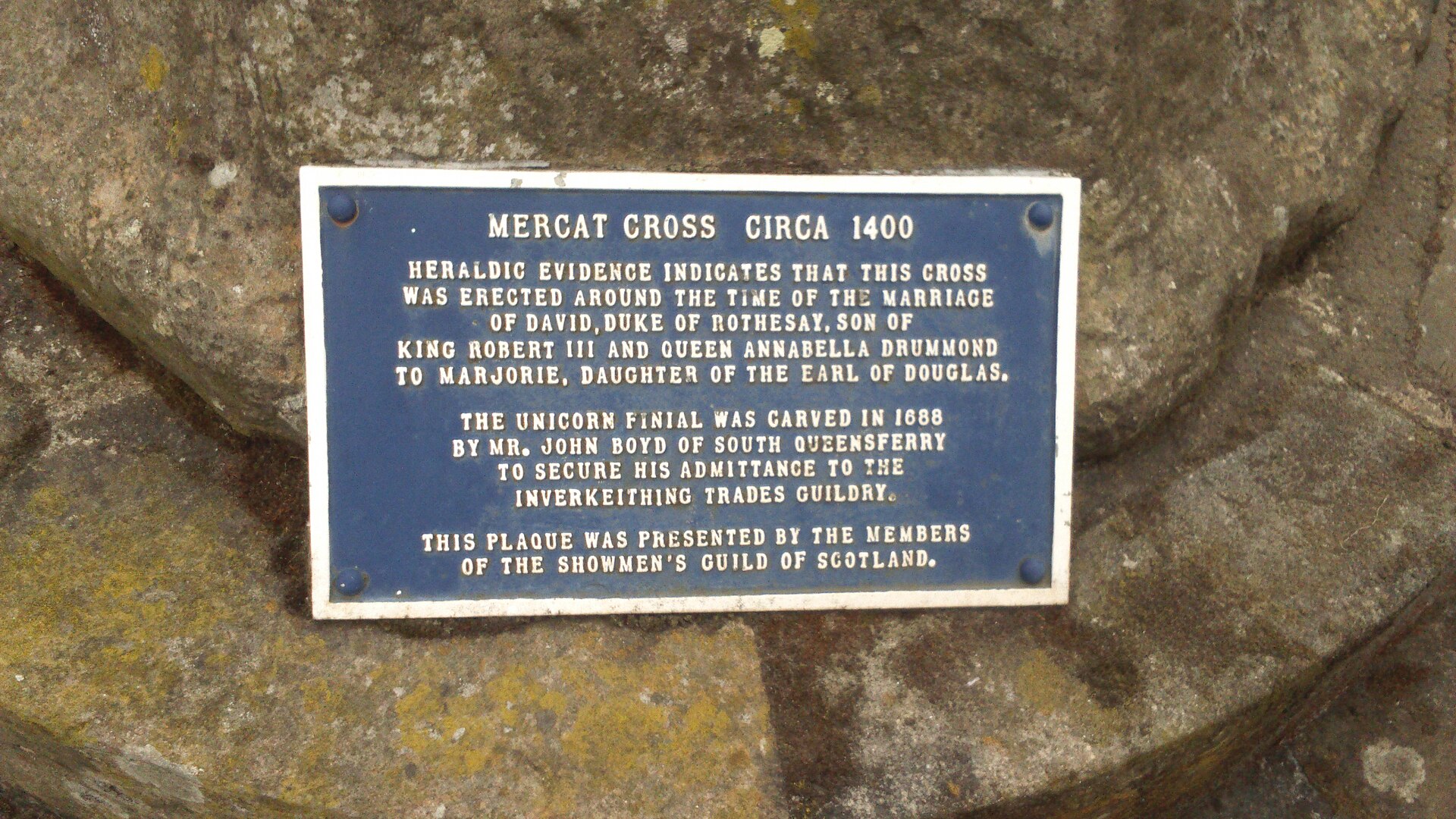
Minor monument · Medieval
Market Cross, Bank Street, Inverkeithing
Fife
Mercat cross with HES-listed pre-1800 evidence (1688).
- Easy path
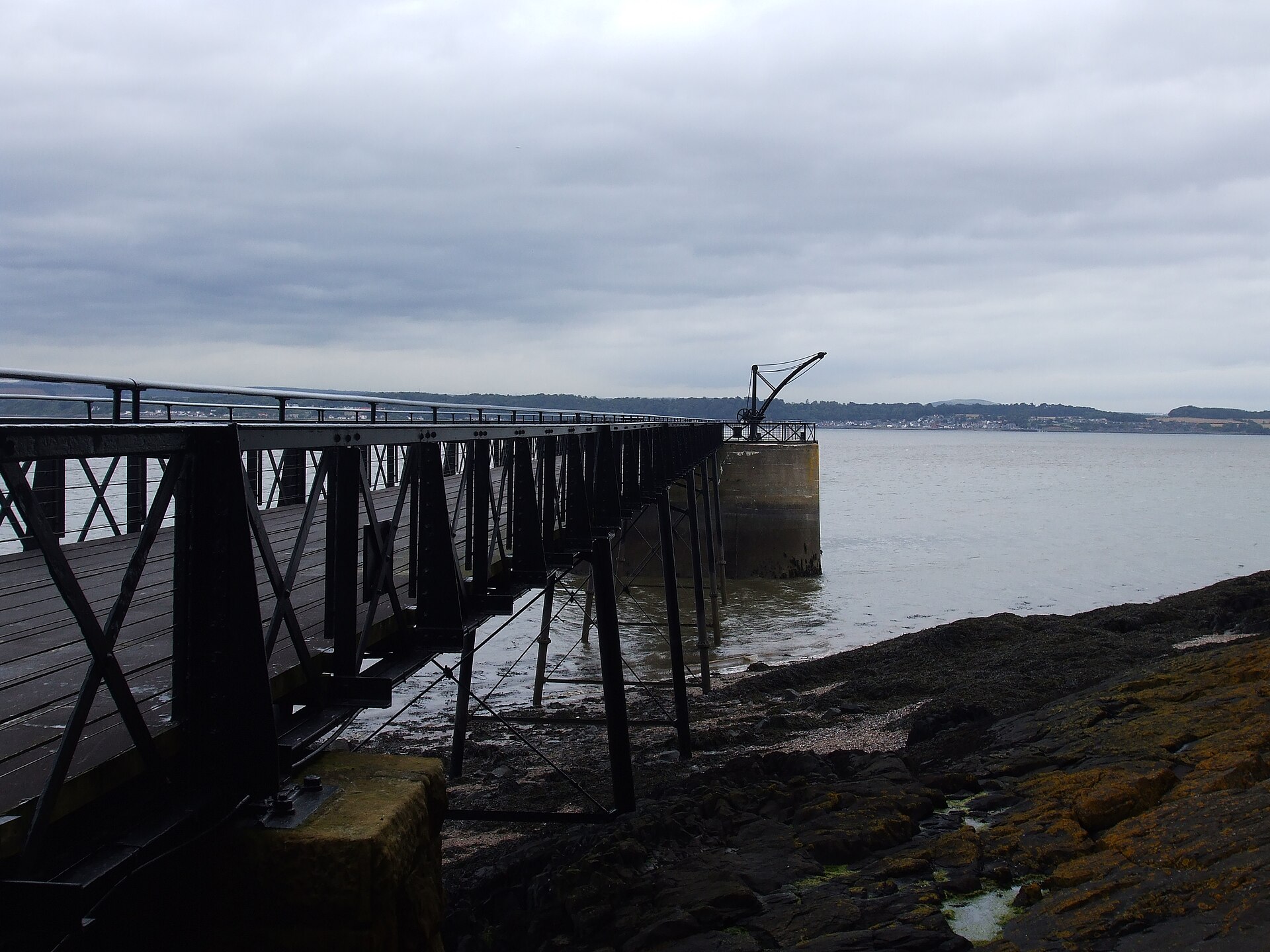
Fortified place · Medieval
Blackness Castle
Falkirk
One of Scotland's great artillery fortresses, Blackness served for centuries as a royal state prison and garrison guarding the Firth of Forth.
Sources
- Canmore site record 49315 (accessed 2026-06-13)
- Trove (HES) record (accessed 2026-06-13)
- Wikipedia: Dunfermline Abbey (accessed 2026-06-13)
- Wikidata Q2044924 (accessed 2026-06-13)
Explore more: Building or ruins · Medieval · Fife
The Ancient Codex, in your pocket
Get the Pocket Codex app
Carry the directory with you — Dunfermline Abbey and thousands of ancient places across Britain and Ireland, offline, wherever you roam.