
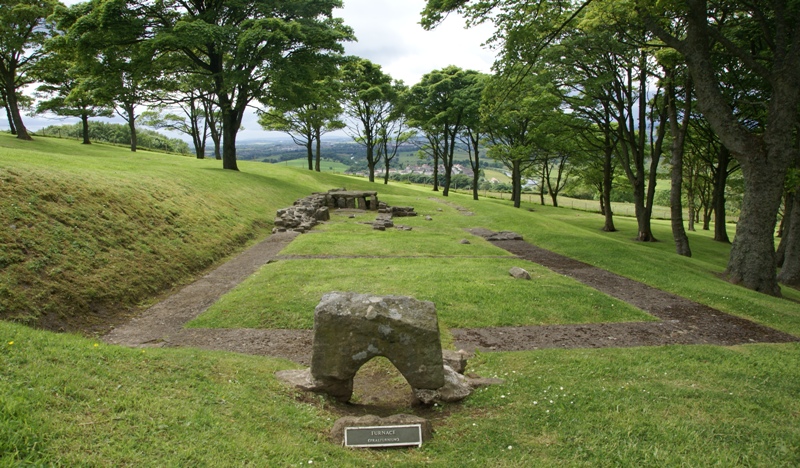
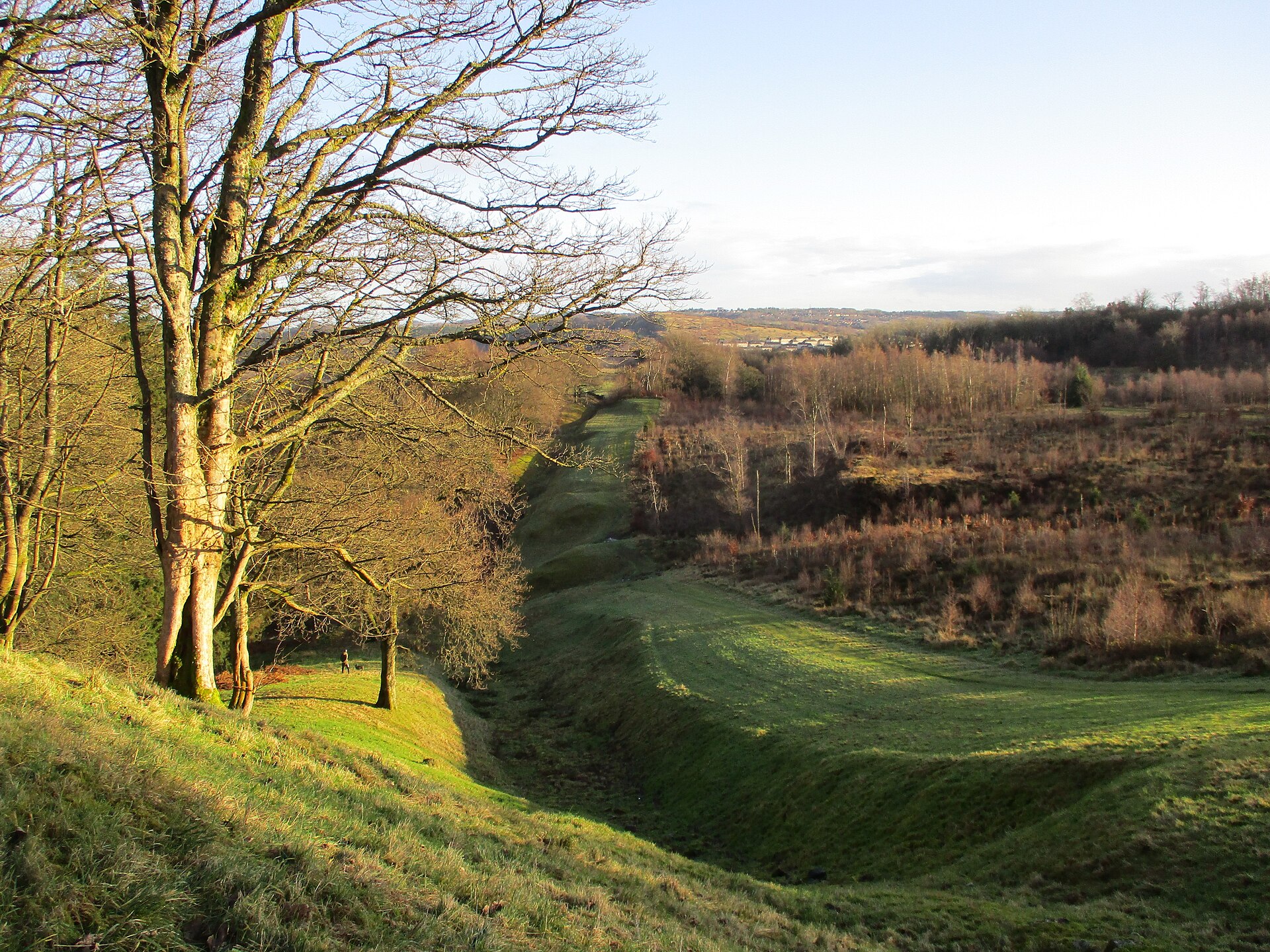
A low mound near the canal is the visible clue to Auchendavy’s Roman past. Auchendavy was a Roman fort (a military base for Roman troops) on the Antonine Wall, the turf-and-stone frontier built across central Scotland.
Canal construction destroyed much of the archaeology, but the site is still notable for the number of antiquities found in and around it. Altars, a distance slab, sculpture fragments, coins, ballista bullets and tools make Auchendavy unusually rich in portable evidence.
What follows is drawn from published sources, with each claim labelled by how firmly it is established.
History
Auchendavy formed part of the Roman military line between Bar Hill and Balmuildy, where the Antonine Wall roughly follows the southern bank of the River Kelvin.
Much of the fort's archaeology was damaged or destroyed during construction of the Forth and Clyde Canal.
Sir George Macdonald wrote about excavations at the site and stressed the large number of antiquities found there and nearby.
People
-
Marcus Cocceius Firmus
Centurion of the Second Augusta Legion who dedicated several altars found at or near Auchendavy.
-
Sir George Macdonald
Historian and excavator who described Auchendavy and its finds.
Cultural influences
-
Religious evidence
The altar group records Roman dedications to Jupiter, Victory, Silvanus, Diana, Apollo, Mars and other deities.
-
Frontier archaeology
The finds help reconstruct military and ritual life on a damaged Antonine Wall fort site.
Connections
-
Forth and Clyde Canal
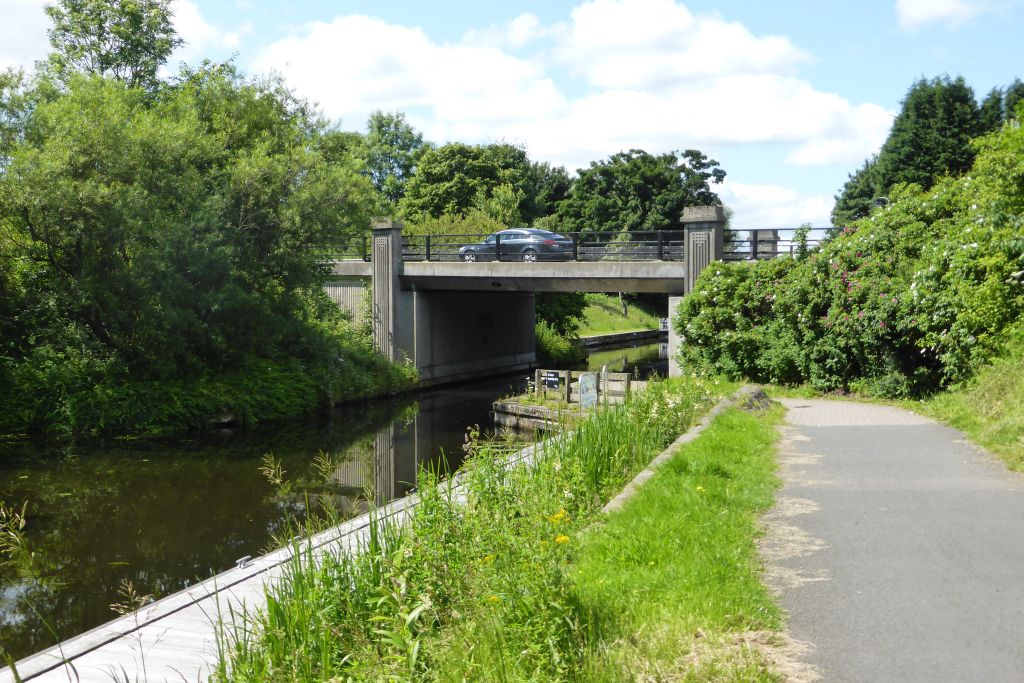
Canal works destroyed much of the fort archaeology and now frame the visible site.
-
Shirva Farm, Twechar
Nearby source area for finds including tombstones.
-
Bar Hill and Balmuildy
Neighbouring points on the Wall line around Auchendavy.
Discovery & excavation
Finds include five altars associated with Marcus Cocceius Firmus, a Twentieth Legion distance slab, a male torso fragment, coins, ballista bullets and iron mallets.
What to look for
-
Mound
The fort can be seen as a mound between the canal and the road.
-
Canal setting
The modern canal explains why the Roman archaeology is fragmentary.
-
Findspot landscape
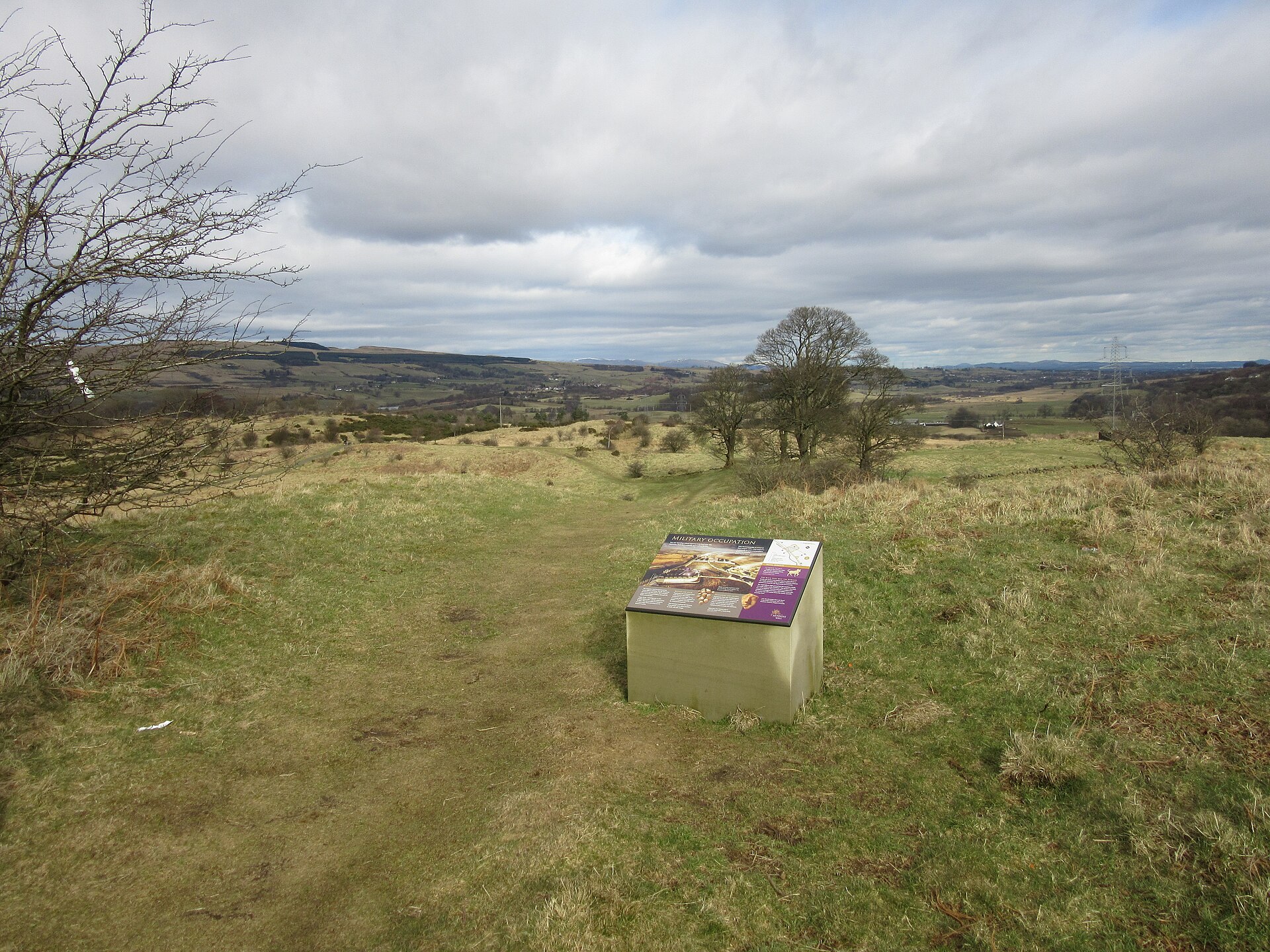
Nearby farms and fields produced several of the recorded antiquities.
Plan your visit
- Location
- 55.9492°N · 4.1194°W
- Access
- Open access
- Terrain
- Moderate walking
Opening & admission
The pack does not give formal visitor access details; the mound can be seen between the canal and the road, so check local rights of way before travelling.
- Much archaeology was destroyed by canal construction.
- The fort is visible as a mound near the Forth and Clyde Canal.
Nearby places
Questions people ask
- What was Auchendavy?
- It was a Roman fort on the Antonine Wall in Scotland.
- What can be seen at Auchendavy today?
- The pack says the fort can be seen as a mound between the Forth and Clyde Canal and the road.
- Why is Auchendavy archaeologically important?
- It produced many finds, including altars, a distance slab, sculpture fragments, coins, ballista bullets and tools.
- Who was Marcus Cocceius Firmus?
- He was a centurion of the Second Augusta Legion who dedicated several altars found at Auchendavy.
- What damaged the site?
- The source pack says builders of the Forth and Clyde Canal destroyed much of the archaeology.
Sources
Explore more: Fortified places · Roman · East Dunbartonshire
The Ancient Codex, in your pocket
Get the Pocket Codex app
Carry the directory with you — Auchendavy and thousands of ancient places across Britain and Ireland, offline, wherever you roam.