
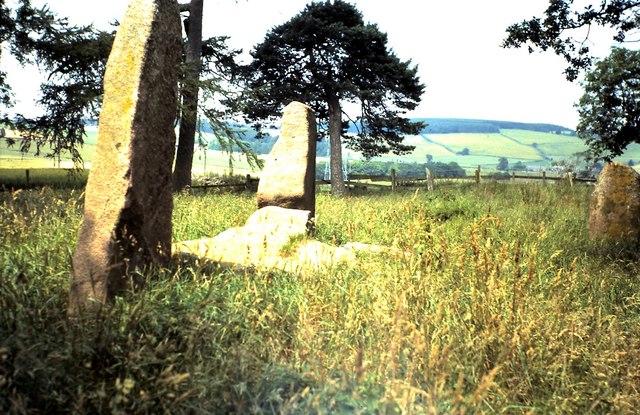
Eight red granite stones enclose eight small cairns on a gravel ridge near Echt. Cullerlie stone circle, also known as the Standing Stones of Echt, is a later development from the recumbent stone-circle tradition with an unusually complete inner cairn layout.
Excavation showed a staged prehistoric construction sequence: ground clearing, burning willow, setting the outer stones, burning oak and hazel inside the rings, placing cremated human bones, and filling the rings with smaller stones.
What follows is drawn from published sources, with each claim labelled by how firmly it is established.
History
Cullerlie stone circle stands near Echt in Aberdeenshire and is also called the Standing Stones of Echt. The circle consists of eight irregular red granite stones.
The stones enclose eight small cairns, with a double ring around the central cairn and single rings around the others. The site sits on gravel at the end of a low ridge linking it with Leuchar Moss.
The surrounding landscape was wet bog when the circle was built in the second millennium BC. A 2004 survey discovered previously unnoticed cup marks on several stones.
H. E. Kilbride-Jones excavated the site in 1934 for the Ministry of Works. Excavation found charcoal from willow, oak, and hazel, plus cremated human bones in five rings.
James Logan wrote in 1820 that similar small circles stood nearby, but the 1934 excavation found no trace of them.
People
-
H. E. Kilbride-Jones
archaeologist who excavated the site in 1934.
-
James Logan
early writer who described possible nearby companion circles in 1820.
Plan your visit
- Location
- 57.1289°N · 2.3566°W
- Access
- Open access
- Terrain
- Easy going
Opening & admission
The source pack does not provide reliable current admission details; verify before travelling.
- The site is a known stone circle near Echt; check current access before travelling.
Nearby places
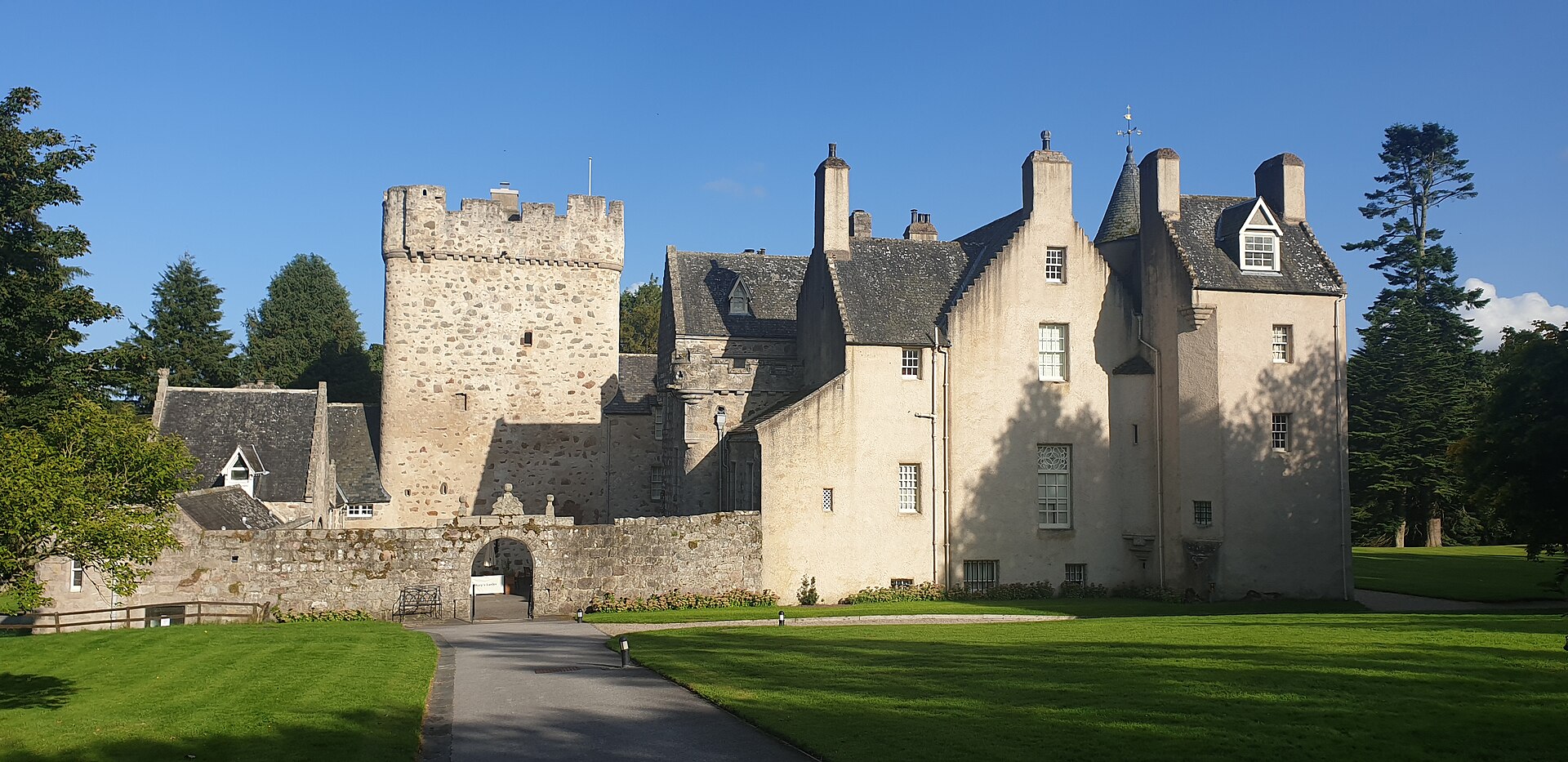
Fortified place · Medieval
Drum Castle
Aberdeenshire
Drum Castle preserves one of Scotland's three oldest and least-altered medieval tower houses, held by a single family for over six and a half centu…
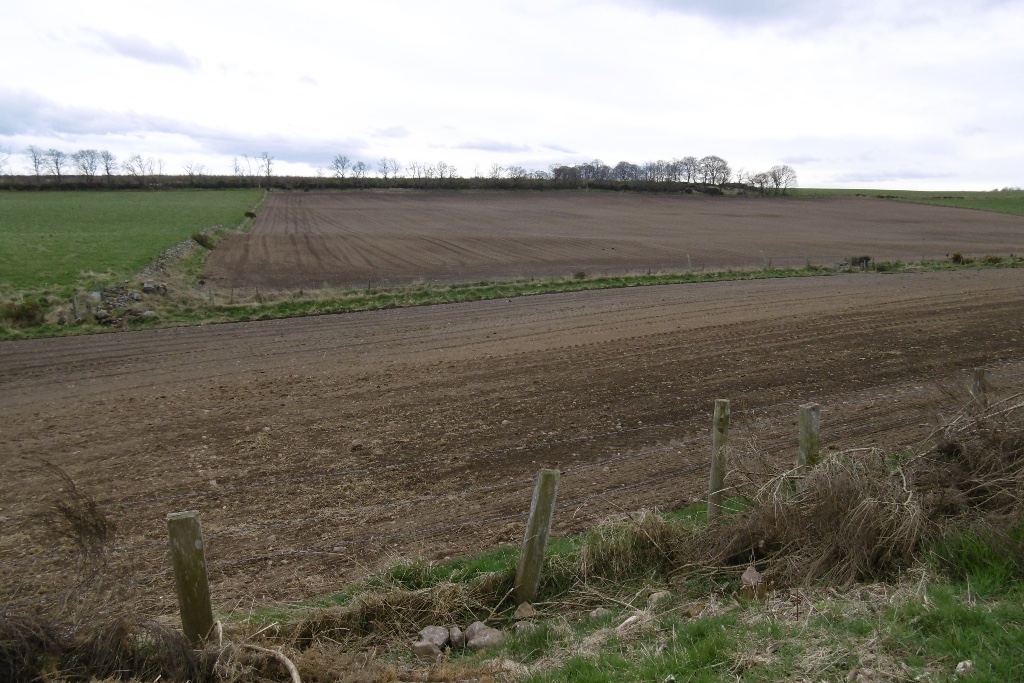
Building or ruin · Medieval
Normandykes
Aberdeen City
As a large Roman marching camp near Aberdeen, it marks one stage of Rome's military advance into north-east Scotland.
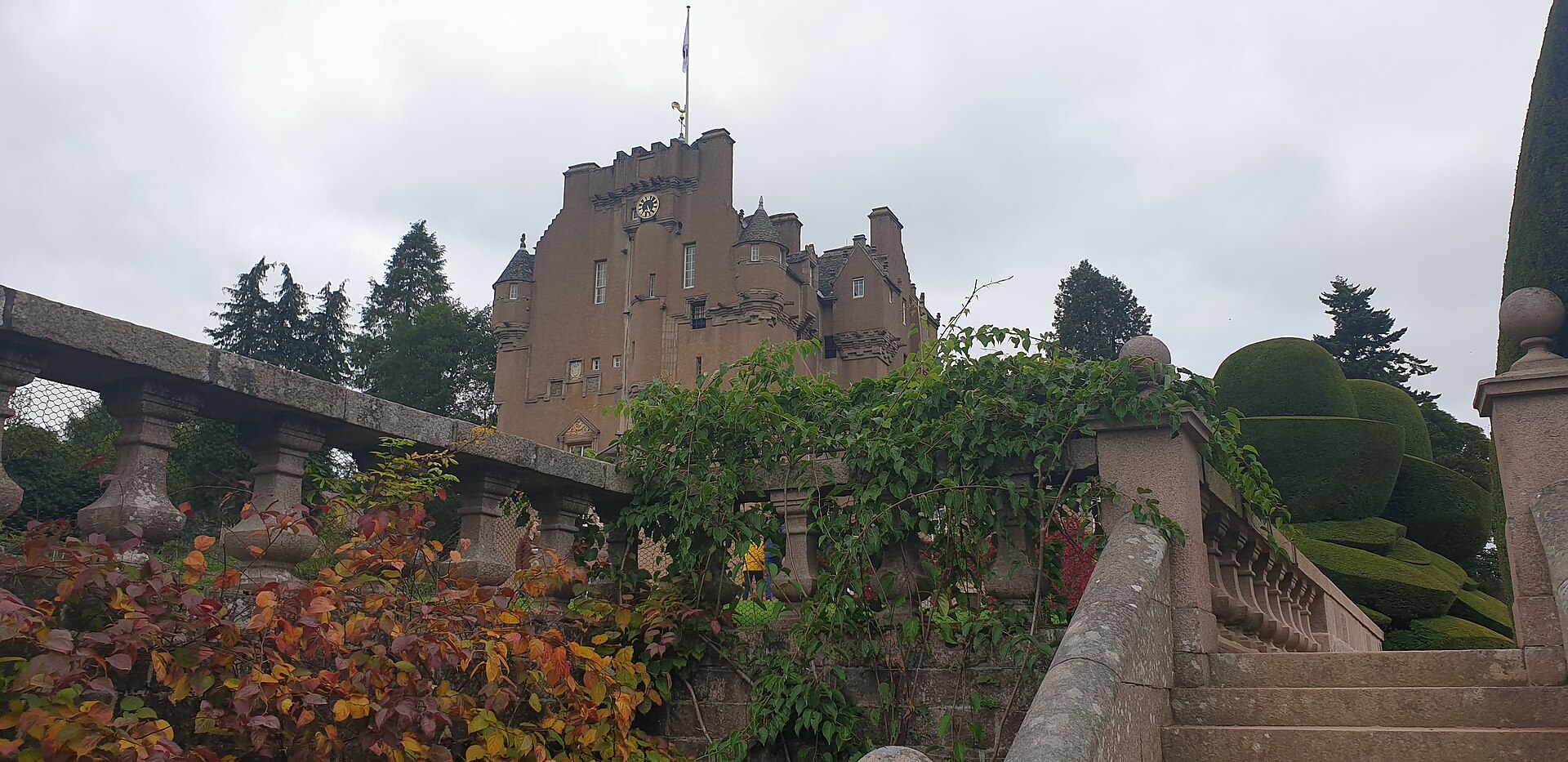
Fortified place · Medieval
Crathes Castle
Aberdeenshire
A sixteenth-century Burnett tower house whose rare Scottish Renaissance painted ceilings and 1702 Irish-yew topiary have survived largely intact in…
Questions people ask
- What is Cullerlie stone circle?
- It is a small Aberdeenshire stone circle enclosing eight small cairns.
- Why is it unusual?
- Its layout of kerbed cairns inside the circle makes it unique in the source pack.
- What did excavation find?
- The 1934 excavation found evidence of burning, charcoal, cremated human bones, and staged construction.
- What are cup marks?
- Cup marks are small round hollows carved into stone; several were noticed in a 2004 survey.
Sources
- Wikipedia article
- Source pack: Cullerlie stone circle
Explore more: Tomb or burial places · Prehistoric · Aberdeenshire
The Ancient Codex, in your pocket
Get the Pocket Codex app
Carry the directory with you — Cullerlie stone circle and thousands of ancient places across Britain and Ireland, offline, wherever you roam.